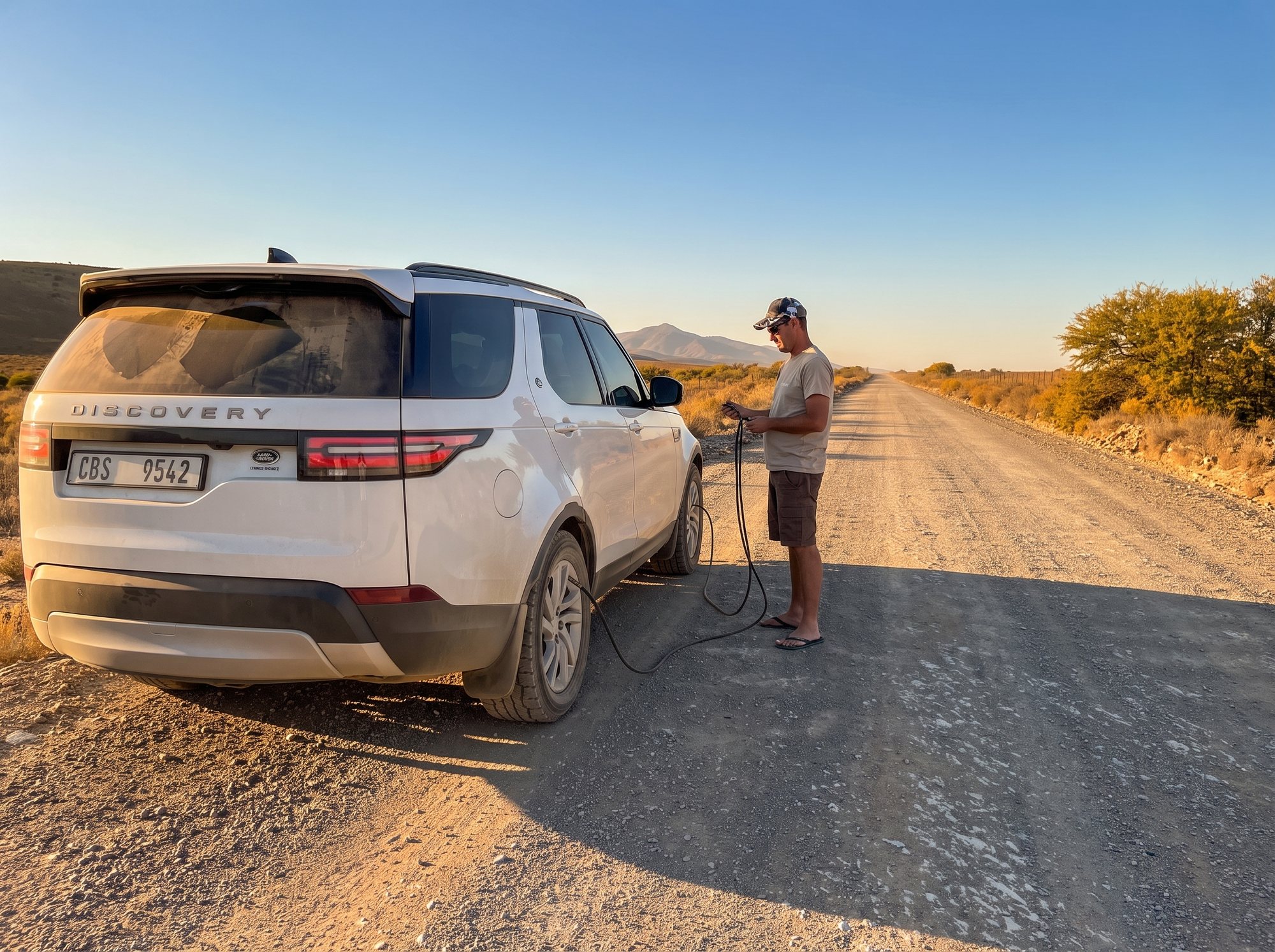
Can my car do this?Yes. As delivered.
You paid for the capable version. Beneath the leather is a drivetrain engineered for exactly this, and a set of controls nobody has ever explained. We explain them at the foot of the pass. Then we go first.
The brochure was telling the truth.
Every luxury 4×4 we take was tested on worse ground than any of our three expeditions before it was allowed to wear its badge.
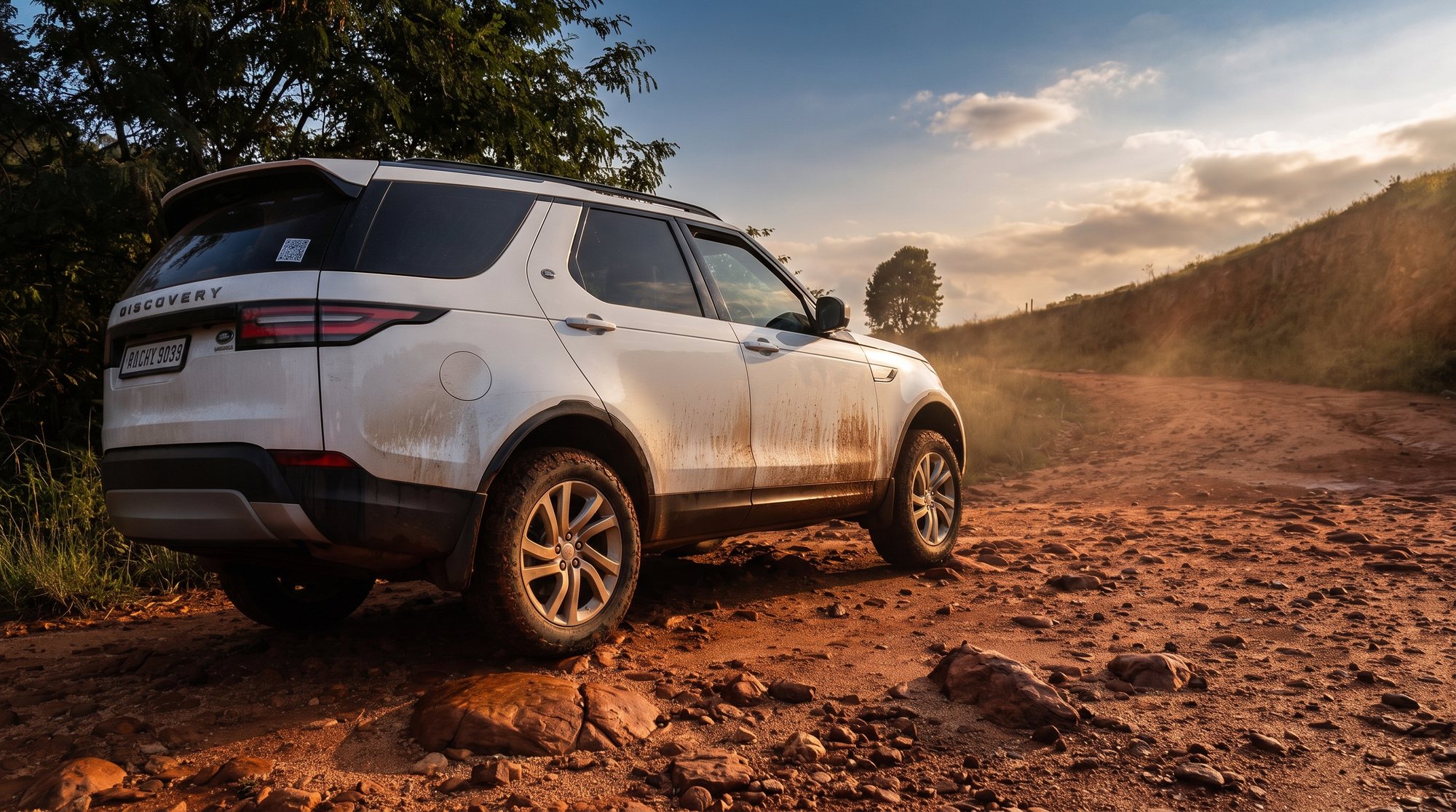
Wading depths, approach angles, crawl ratios, terrain modes: all of it is real, all of it works, and almost none of it has been used on your car. The passes we drive are public gravel roads and forestry tracks with a handful of water crossings and one or two famous descents. They sit comfortably inside what the engineers designed for. It only feels impossible because nobody has walked you through it.
That, more than the road, is what Forgotten Routes offers: someone who has done it many times, going first.
What your car already has.
Before we leave, we walk around every car with its owner and show them which of these they will use that day, and when. It takes ten minutes.
How we keep it perfect.
The fear of the first scratch is why the car stays in the garage. Everything below exists to take that fear away.
Scouted the week before. Driven again that morning.
Every crossing and every descent is driven in the lead car before you see it. Water levels change. We check.
The lead-car rule.
If the lead car, as standard as yours, will not do it, nobody does it. Your car is never asked to do something the lead car has not just done.
Your line is our line.
You follow the lead car's wheel tracks. Someone stands at anything that needs a spotter. There is no guessing and no heroics.
Tyre pressures, set and reset.
We lower them for the gravel and bring them back up for the tar. A compressor travels with the convoy.
The most careful driver sets the pace.
This is a pass, not a race. The convoy moves at the speed of whoever is least sure, and nobody minds.
Anything that goes wrong is ours to put right.
Recovery gear, plugs, straps and a crew that has done this before travel with the convoy. You are never alone with a problem on a mountain.
Yours, most likely.
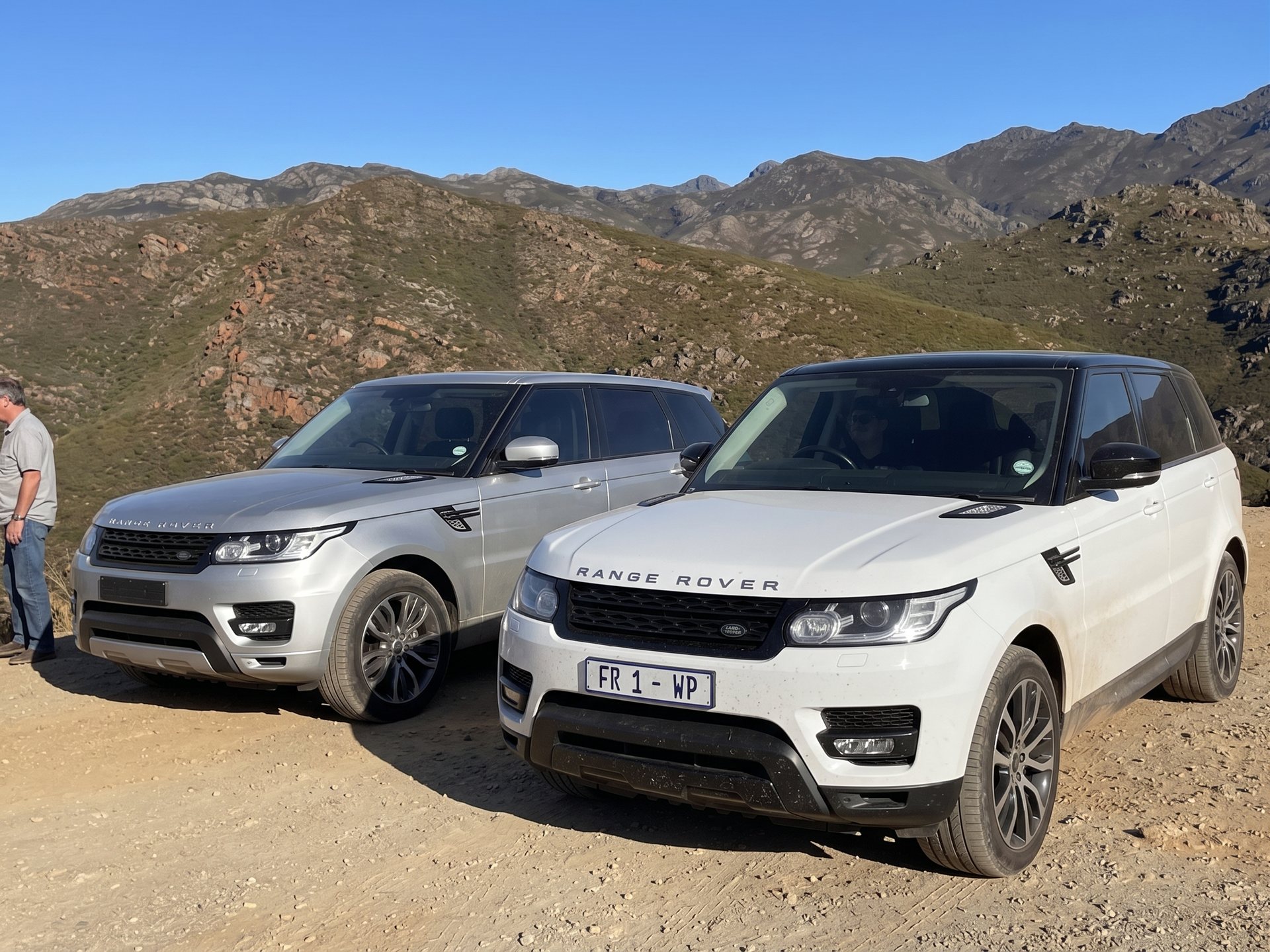
The British ones, the German ones, the Japanese ones. If it has a badge you paid for, a low-range button you have never pressed and no bolt-on parts, it belongs here. We do not keep a list of approved models, and we do not rank them.
What we look for is not the badge but the state of the car. Standard, or close to it, is what the expedition is for. If yours is lifted and armoured you will be fine on the road, but you will miss the point of it, and we would rather give the place to someone who won't.
Not sure? Ask anyway and tell us what you drive. A person will tell you honestly.
No car with you? Take one of ours.
We keep a small number of our own cars, luxury 4×4s as delivered, for guests who live further away than a tank of fuel.
Fly into George and one of ours is waiting for you at the hotel, as it left the showroom, on the wheels the factory fitted and the same standard-size all-terrains the lead car wears. You drive it over the pass the way an owner would. The camp, the chef and the hotel are exactly the same. The only difference is whose garage it sleeps in afterwards.
There are only a few of them, so they go by request, like the places. Ask for one when you request your place and we hold it with your date. Bring your driving licence. We handle the rest.
The questions everyone asks.
Will my car get scratched?
The Swartberg, the Baviaanskloof and the Outeniqua passes are graded public roads and forestry tracks, not bush tracks. There is no pushing through vegetation, and we travel at a pace and on a line that keeps it that way. Dust on the doors, yes. That washes off.
What about the underside, the wheels, the air suspension?
You follow a car on the same 21-inch wheels and the same air suspension over the same rocks, ten metres ahead of you, at walking pace. If it would trouble the lead car, we do not go there. Ride height goes up for the descent and comes back down for the tar home.
Is it a public road? Does my insurance apply?
Yes. The Swartberg Pass and the road into Gamkaskloof are public roads maintained by the province. Most comprehensive policies treat them like any other road, but policies differ, so we give you a plain description of the route to check against yours before you commit.
What if the car breaks down or gets stuck?
Then it is our problem, not yours. A compressor, plugs, straps and recovery gear travel with the convoy, the crew has done this before, and the support vehicles are already in the valley. Nobody is left alone on a mountain.
Do I need to have done this before?
No. Most of our guests have never had their car off the tar. The walk-around at the foot of the pass covers everything you will use that day. The rest you learn by following.
Do I need all-terrain tyres?
No. Road tyres have done these passes many thousands of times. The lead car wears standard-size all-terrains because it is out here every month, and that is the one thing on it the factory did not fit. If you already have all-terrains, good. If not, do not buy them for this.
I am flying in. Can I borrow a car?
Yes. We keep a small number of our own luxury 4×4s, as delivered, for guests who arrive without theirs. Ask for one when you request your place and we hold it with your date. The car is quoted separately, on the same call.
Can I bring a modified 4×4?
You can ask. Places go to standard and near-standard luxury 4×4s first, because proving what an unmodified car can do is the whole point of the expedition. A built truck will be happier elsewhere.

Experience what you actually bought.
Your luxury 4×4, as delivered, somewhere it has never been, and home with dust on the doors and nothing else. Tell us what you drive and we will tell you if there is a place.