Baviaanskloof.Longer. Wilder. Older.
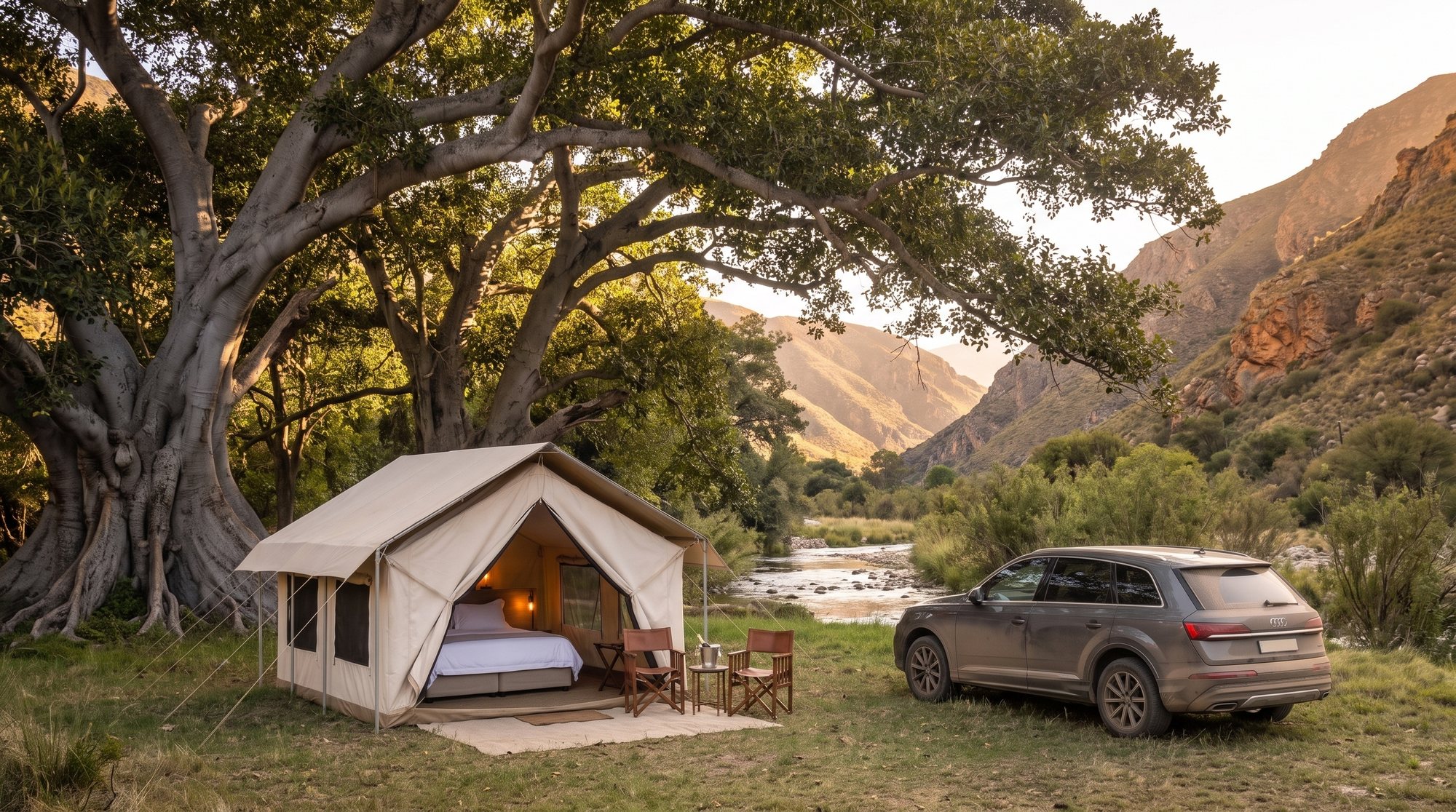
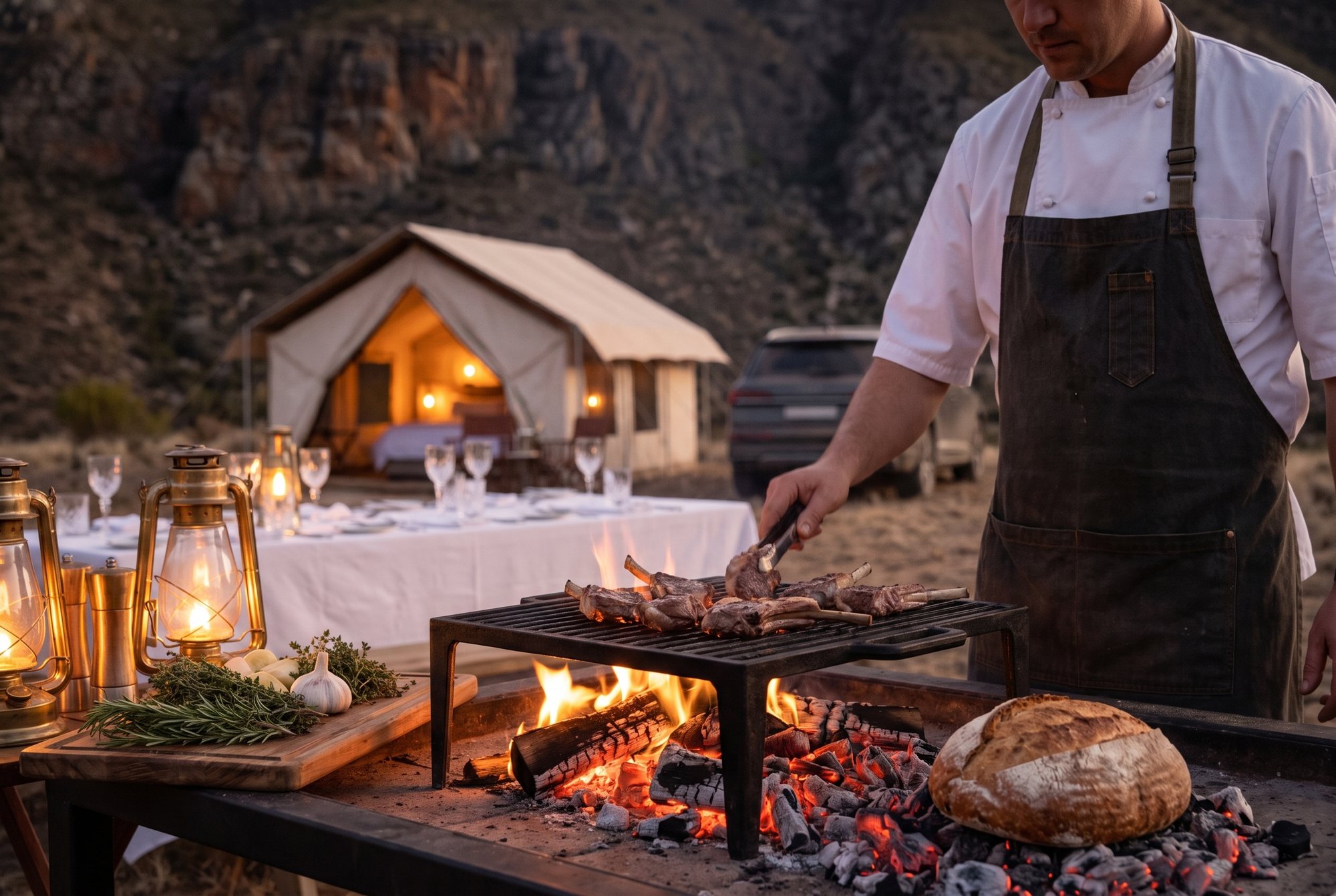
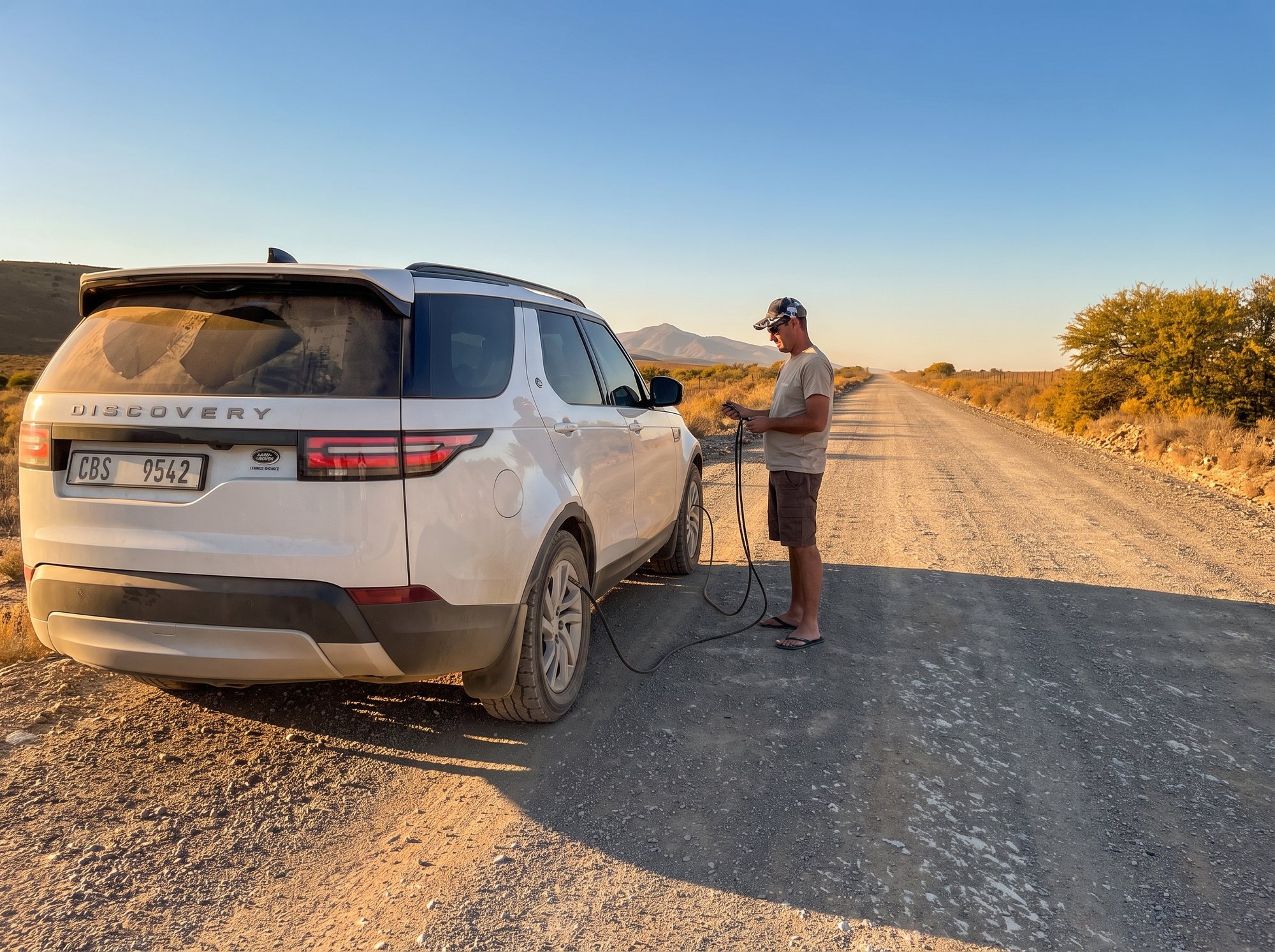
Three days through a valley with no fuel, no signal and no shortcut out, where the road passes trees that were old before anyone wrote anything down. A night under canvas in the middle of it, with the chef and the champagne, and a night in a hotel at the far end.
Not a road. A world.
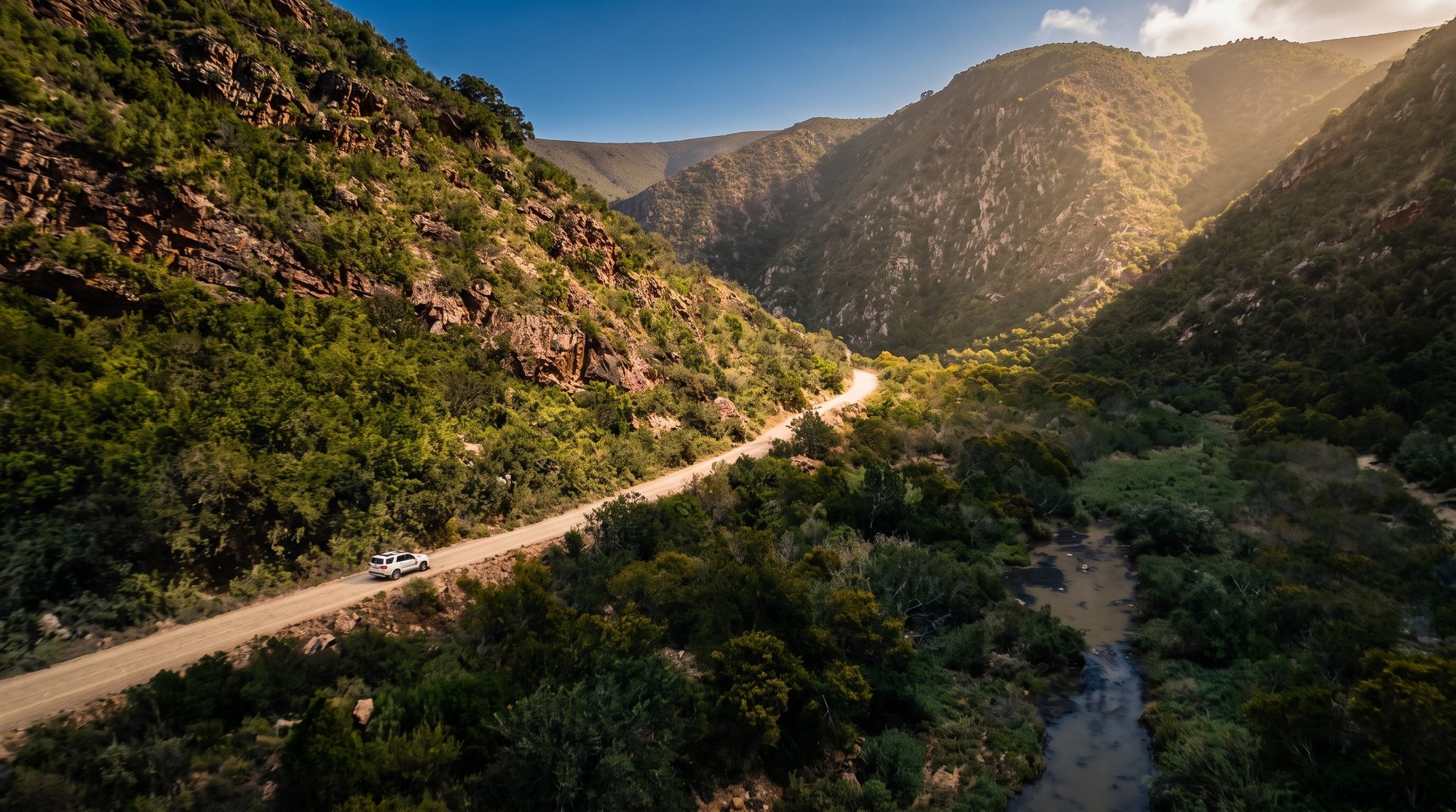
The Baviaanskloof is a valley nearly two hundred kilometres long, held between two mountain ranges, and it has been left alone for a very long time.
It is part of the Cape Floral Region World Heritage Site, and most of South Africa's biomes meet inside it: fynbos on the ridges, thicket in the kloofs, Karoo scrub on the dry flats, forest along the water. Leopards still live in the side valleys. The San painted on the rock overhangs, the Khoikhoi herded through it, and the handful of families who farm here now still fetch their water from springs that have not stopped running.
This is why we run it. The gravel is the excuse. What you are actually driving through is the oldest, quietest and least understood piece of country most South Africans will ever see, and the luxury 4×4 in your garage is the only civilised way in.


The well, and the trees that saw the Khoikhoi ride through.
A few hours in, under a canopy of wild fig, there is a stone well that has been pushing cold, clear water through pipes laid generations ago and has never stopped.
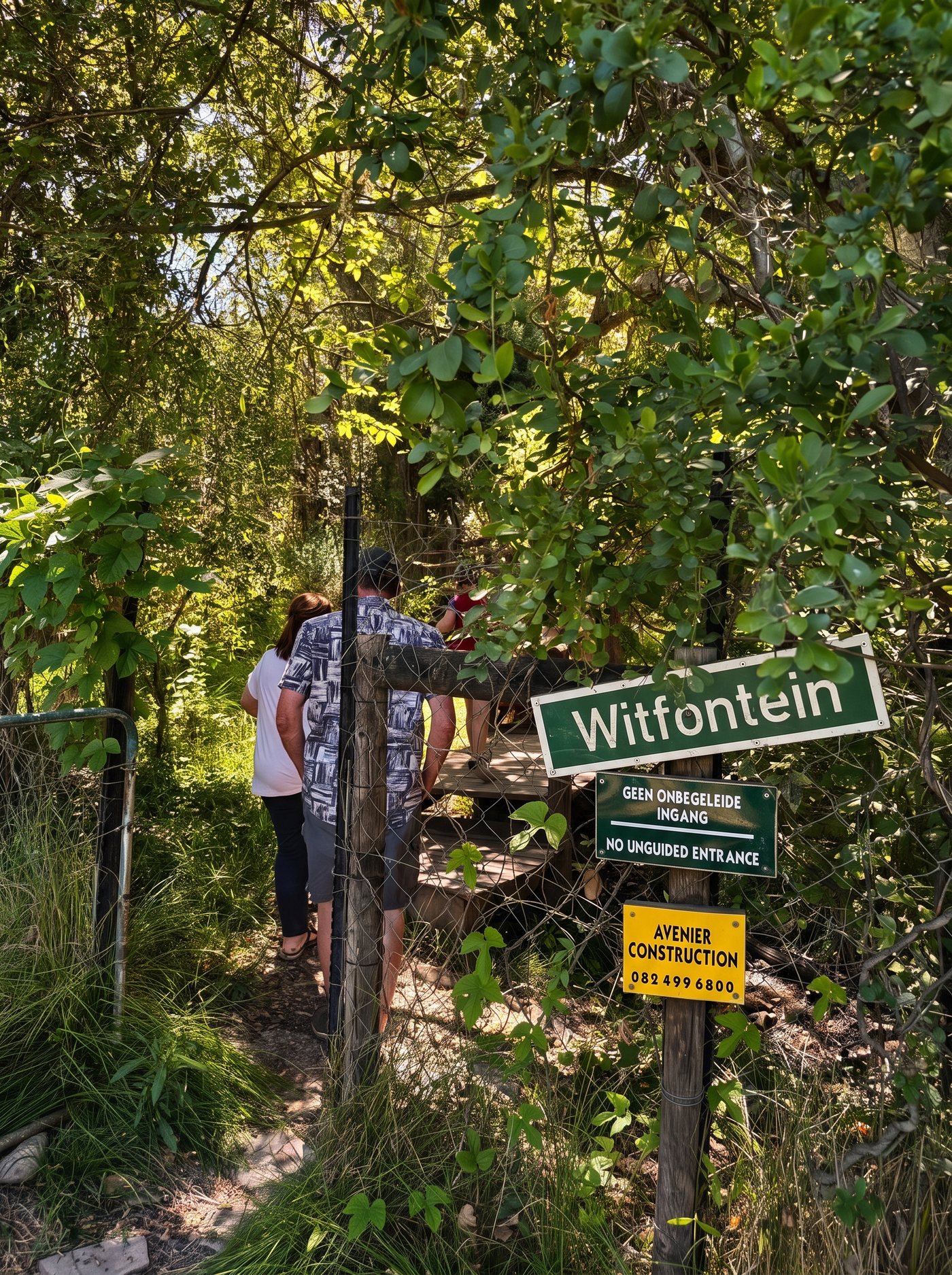
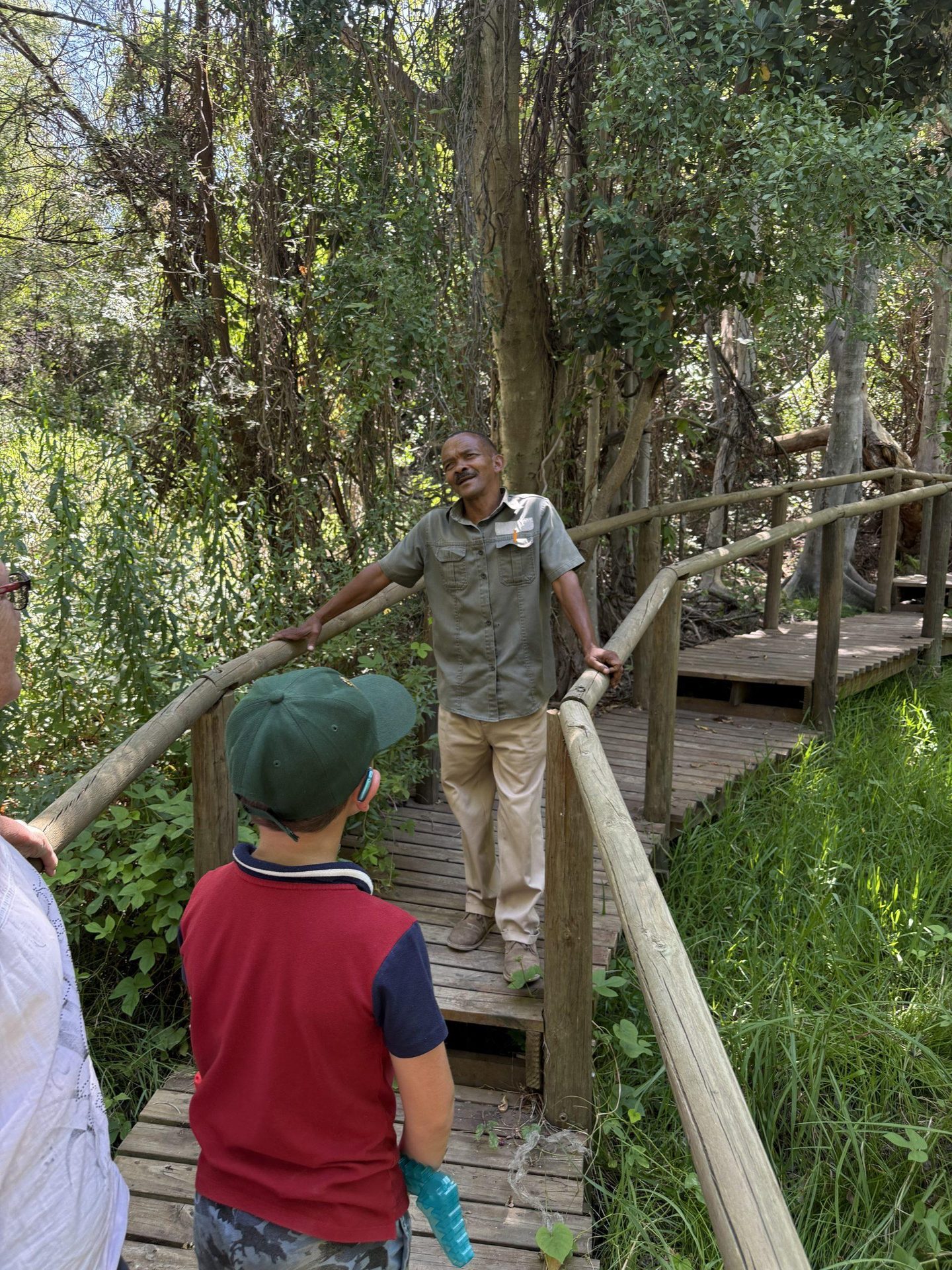
A ranger appears from nowhere, the way rangers do, and points you to a boardwalk into the trees. "Walk that," he says. "Those trees saw the Khoikhoi ride through." The trunks are enormous. You lower your voice without deciding to. Centuries of leaves underfoot, and nothing to hear but the wind in the tops of the canopy. It is one of the quietest places in the country, and it is a ten-minute walk from where you park.
This is the part of the expedition nobody expects and everybody talks about afterwards. Not the driving. The standing still.
Where the gravel turns to rock and water.
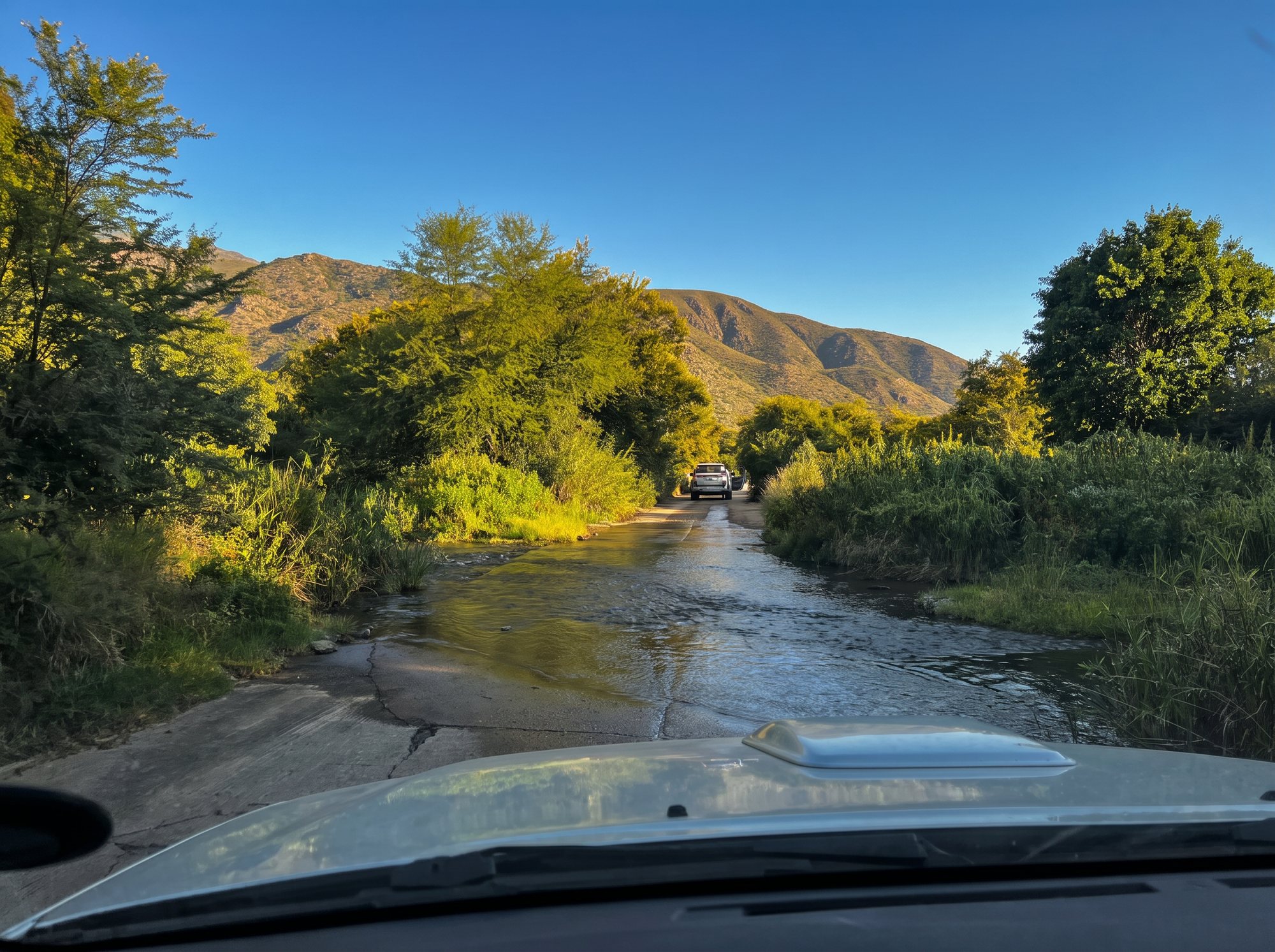
Past the gate the road stops pretending. The crossings start small and grow until they are deep, green and overgrown on both banks, one after another, with the mountains closing in on either side. Then the climb: loose, steep, low range and first gear, both cars crawling with the engines barely ticking over, until a bend opens onto the whole valley below you.
There are no phones up there and no engines anywhere in the distance. You get out and stand in it. People who never stop talking stop talking. You do not get silence like that at home, and it takes a minute to trust it.
The camp is standing in the heart of the reserve when you come down the other side: the same king bed, the same pressed linen, the same chef and the same silent power. The second night is in a hotel at the eastern end, with a bath and a proper bed. The logistics are harder here than anywhere else we go. That is our problem to enjoy, not yours.
The shape of it
Into the kloof
Convoy from Willowmore. Tyres down at Uniondale, the last tar. Witfontein, the well and the fig forest on foot. The western passes and the reserve gate. Camp standing by the time the light goes gold.
The middle of nowhere
The long day. The crossings, the climb, the view, and a lunch that took a chef to make. Out the eastern gate near Patensie by late afternoon, and a hotel with a bath waiting.
Home
Breakfast at the hotel. Tyres back to road pressure. The drive home in a car you will never look at the same way, having seen a piece of the country most people never will.
Baviaanskloof dates
Baviaanskloof runs every third month, at the end of the month. Four cars at most. It is the harder expedition to stage, and the harder one to get a place on.
Guests who have done Die Hel with us are offered Baviaanskloof dates first.
The oldest quiet in the country.
Baviaanskloof places are offered to Die Hel guests first, and to the waiting list after that. Ask, and we will tell you where you stand.